Understand social media checks for B-1/B-2 visas: key insights for business travelers.
Understanding USCIS Social Media Screening: What Every Visa Applicant Must Know
In today's digital age, your social media presence has become a critical factor in visa adjudication. The Department of Homeland Security has significantly expanded its social media screening programs since 2024, implementing more sophisticated algorithms and broader review protocols that affect millions of visa applicants annually. Understanding how this screening works—and what content triggers red flags—can mean the difference between approval and denial.
The USCIS Social Media Screening Enhancement Program now reviews publicly available social media content for all visa categories, not just those previously subject to enhanced vetting. This represents a fundamental shift in how immigration officers evaluate applications, with social media serving as both a verification tool and a security screening mechanism. Consular officers and USCIS adjudicators are trained to identify specific categories of concerning content that align with DHS keyword lists and behavioral indicators.
The DHS Screening Framework: Categories and Keywords
The Department of Homeland Security maintains a comprehensive framework for social media screening that includes multiple categories of concerning content. These categories range from obvious security threats to more nuanced indicators of potential immigration fraud or visa violations. Understanding these categories allows applicants to audit their own profiles before government screening occurs.
The primary DHS screening categories include violence and threats, terrorism-related content, fraud indicators, immigration intent violations, and public safety concerns. Each category contains specific keywords and contextual patterns that trigger either automated flags or manual review. While the complete keyword list is not publicly available, immigration compliance experts have identified common patterns through case analysis and FOIA requests.
Platform-Specific Screening Considerations
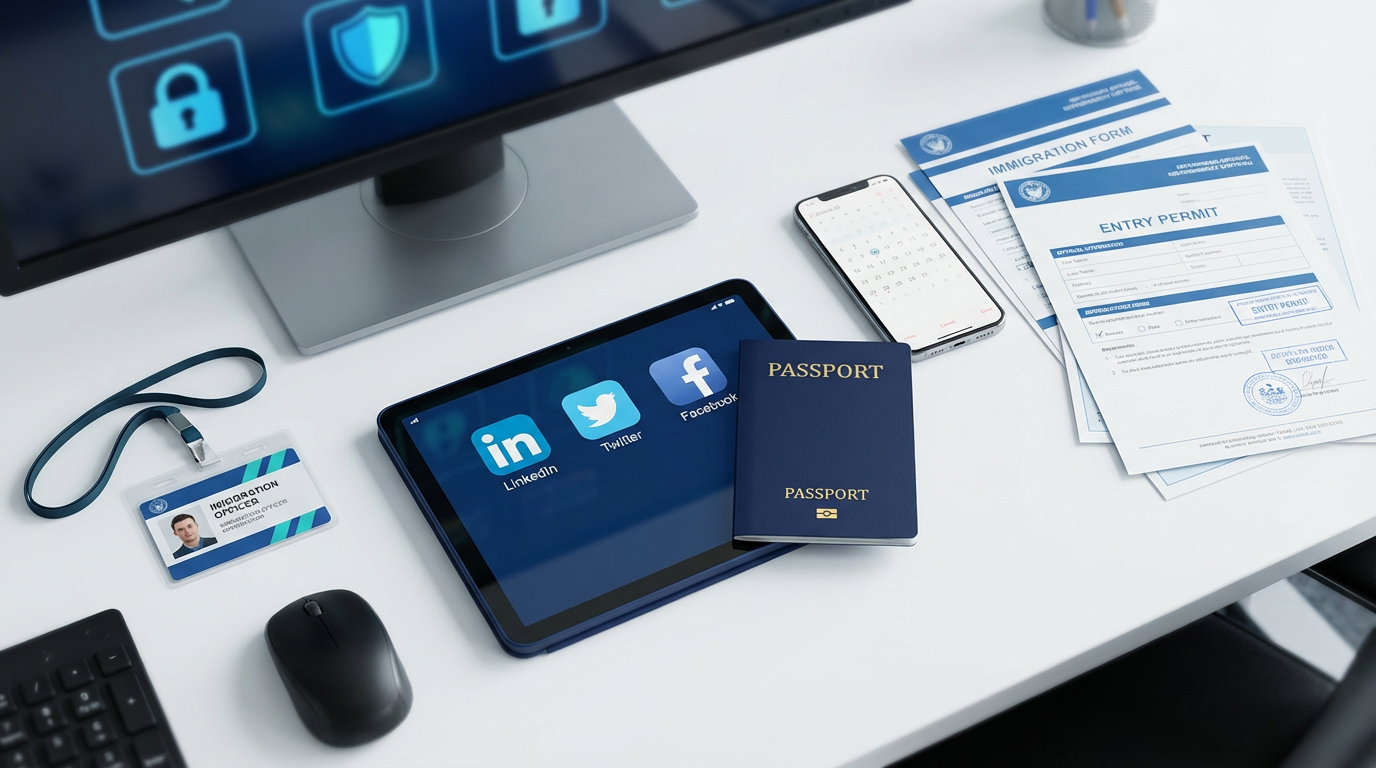
Different social media platforms present unique screening challenges and opportunities. Instagram and Facebook posts with geotags can verify or contradict claimed travel history, while LinkedIn profiles are scrutinized for employment history accuracy. Understanding how each platform's content appears to screeners helps applicants prioritize their cleanup efforts effectively.
Port of Entry Social Media Screening: Key Procedures and Expectations
As part of the visa application process, social media screening extends to the port of entry, where Customs and Border Protection (CBP) officers may conduct checks. This process is crucial for business travelers entering under the B-1/B-2 visitor visa categories. Understanding what to expect at the port of entry can help alleviate anxiety and ensure smooth passage.
CBP officers are trained to perform quick, efficient screenings that focus on identifying potential red flags related to visa compliance. They have the authority to request access to social media accounts if they suspect any discrepancies between stated travel purposes and online personas. This is particularly relevant for those using the Visa Waiver Program (ESTA), which involves automated screening protocols that flag potential concerns before travelers even arrive in the U.S.
Red Flags: What CBP Officers Look For
CBP officers are vigilant about detecting signs of unauthorized work or intent to remain beyond the authorized period, both of which are common concerns for those on a B-1/B-2 visa. Social media content that suggests employment in the U.S., such as LinkedIn profiles listing U.S. companies or photos depicting work settings, can trigger additional scrutiny.
Other red flags include posts showing ties to the U.S. that might indicate immigrant intent, such as frequent visits, close relationships with residents, or comments suggesting a desire to stay permanently. Additionally, any content that aligns with DHS's terrorism-related keywords or patterns of behavior will likely prompt a more in-depth investigation.
Preparing for Social Media Checks at the Port of Entry
To mitigate the risks of social media checks at the port of entry, applicants should conduct a thorough review of their online presence before traveling. This includes ensuring that privacy settings on platforms like Facebook and Instagram are appropriately restrictive and that any public content aligns with the stated purpose of their visit.
Business travelers should verify the accuracy of LinkedIn profiles and ensure that professional claims match visa declarations. Removing or adjusting any content that could be misinterpreted as indicating work intent or permanent residence plans is also advisable. Using tools like VisaClear's AI-powered screening can help identify potential red flags before they become issues at the port of entry.
Step-by-Step Checklist for Social Media Screening Preparedness
To help business travelers prepare for social media screening, here is a comprehensive checklist that covers each stage of the process, from pre-application to post-arrival reviews.
Before Applying for the Visa
Before Traveling to the U.S.
Upon Arrival at the Port of Entry
Common Mistakes to Avoid During Social Media Screening
Understanding common pitfalls in social media screening can help applicants avoid unnecessary complications. One frequent mistake is the failure to update privacy settings, which can expose sensitive information to immigration officers. Ensuring that only relevant, non-controversial content is publicly visible is crucial.
Another error is inconsistent information across different platforms. For instance, discrepancies between a LinkedIn profile and the details provided in a visa application can raise suspicions. Applicants should ensure all publicly available information is consistent and accurately reflects their travel intentions.
Additionally, sharing content that contradicts visa declarations, such as photos of extended stays or comments indicating plans to work in the U.S., can lead to visa denials. Avoiding these mistakes requires careful review and, if necessary, the removal of problematic content before application submission or travel.
Conclusion: Navigating Social Media Screening with Confidence
Social media screening is an integral part of the visa application process, particularly for business travelers entering the U.S. under the B-1/B-2 visa categories. By understanding the DHS's screening criteria and preparing accordingly, applicants can reduce the risk of adverse decisions and ensure compliance with entry requirements.
It is advisable to consult with an immigration attorney if there are any concerns about social media content or visa eligibility. Additionally, leveraging tools like VisaClear's AI-powered solutions can provide valuable insights into potential red flags, helping applicants address issues proactively.
Ultimately, maintaining a clear, consistent online presence that aligns with stated travel intentions is key to successfully navigating social media screening at the port of entry.